

In Texas, we like to be ready for whatever comes our way—and if you’ve lived in Harris County for any length of time, you know the power doesn’t always stay on when the weather rolls in. Whether you’re talking tropical storms or just the grid having a bad day, more homeowners are turning to backup power to keep their homes running and their families safe.
When people ask whether home generators “run on gas,” they’re usually collapsing several very different fuel types into one word. That’s where a lot of confusion starts. Home generators can run on natural gas, propane, gasoline, or sometimes more than one of those—but which fuel applies depends almost entirely on whether you’re talking about a permanently installed whole-home standby system or a portable backup unit.
And here in Houston, where hurricane season and sudden grid failures are just part of life, having a better grasp of what fuels different types of home backup generators can make a big difference. Fuel types affect how long backup generators will run, and how much work you’ll have to put in during an outage.
Common Home Generator Fuel Types
Natural Gas (Set It and Forget It)
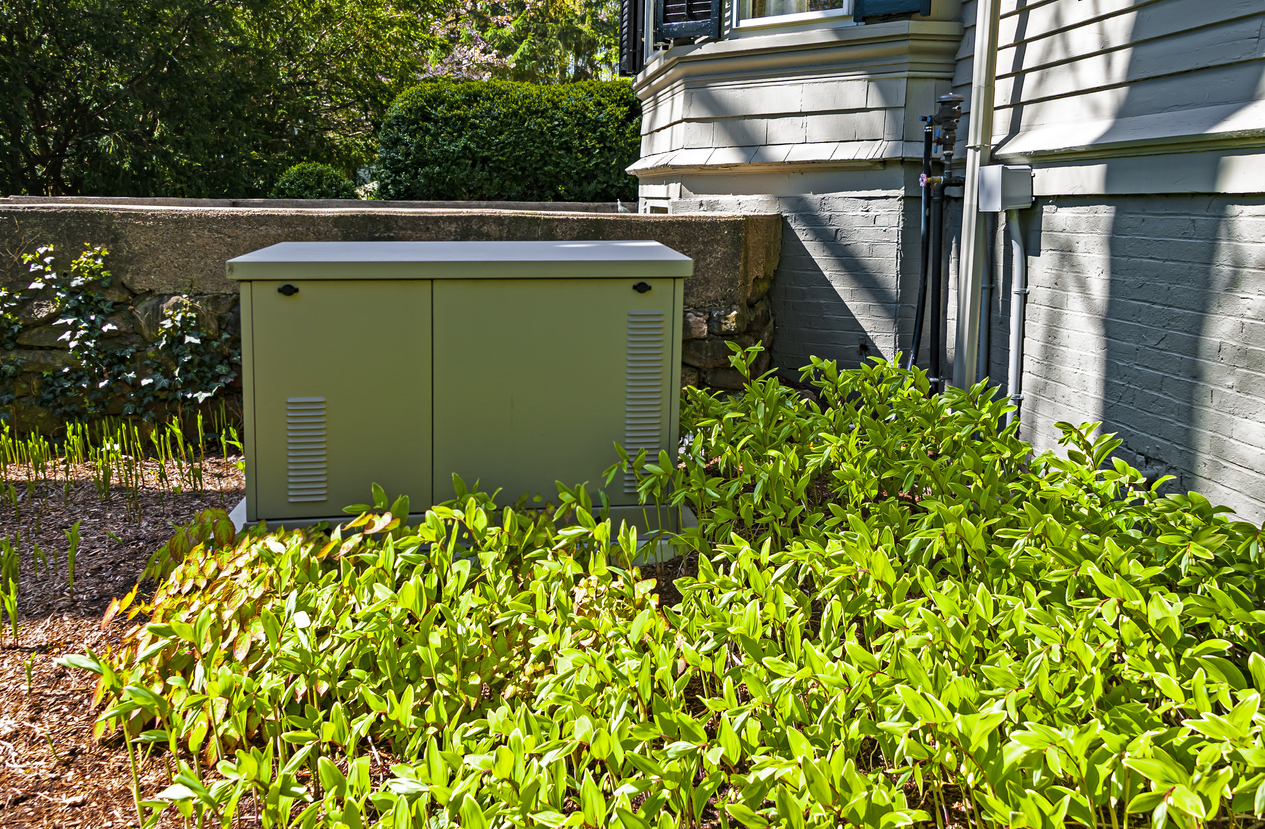
Most standby generators installed here in Houston are hooked straight into your home’s natural gas line. Think of it like your furnace or water heater—it pulls fuel directly from the gas utility, no tanks involved.
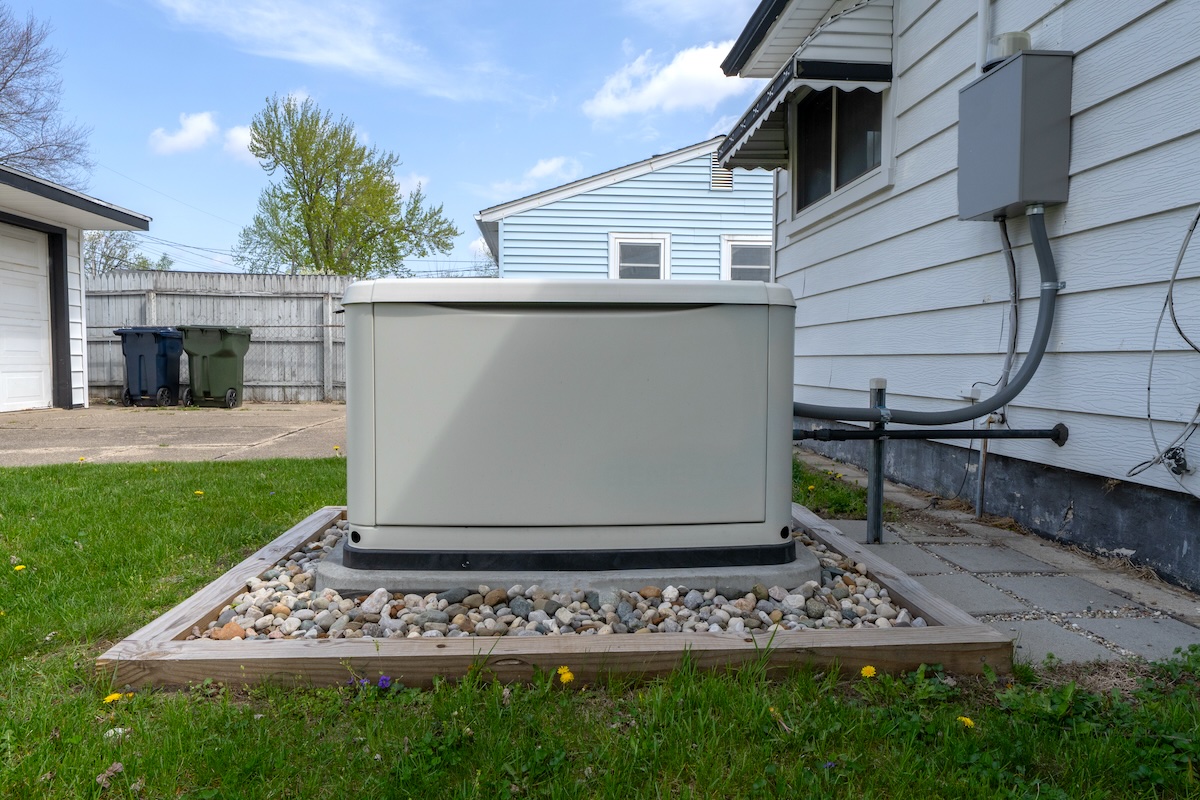
The big win with natural gas? It runs as long as the gas service stays on. There’s no refueling, no hauling anything, and no fuel going stale. That’s a big reason why natural gas generators are so common in neighborhoods with consistent utility gas service.
Now, to be fair, natural gas doesn’t burn quite as hot as propane, so you might see slightly lower output numbers compared to propane systems. But if your generator is sized properly, that difference usually doesn’t matter much in real-world use.
Propane (Fuel Independence, On Your Terms)
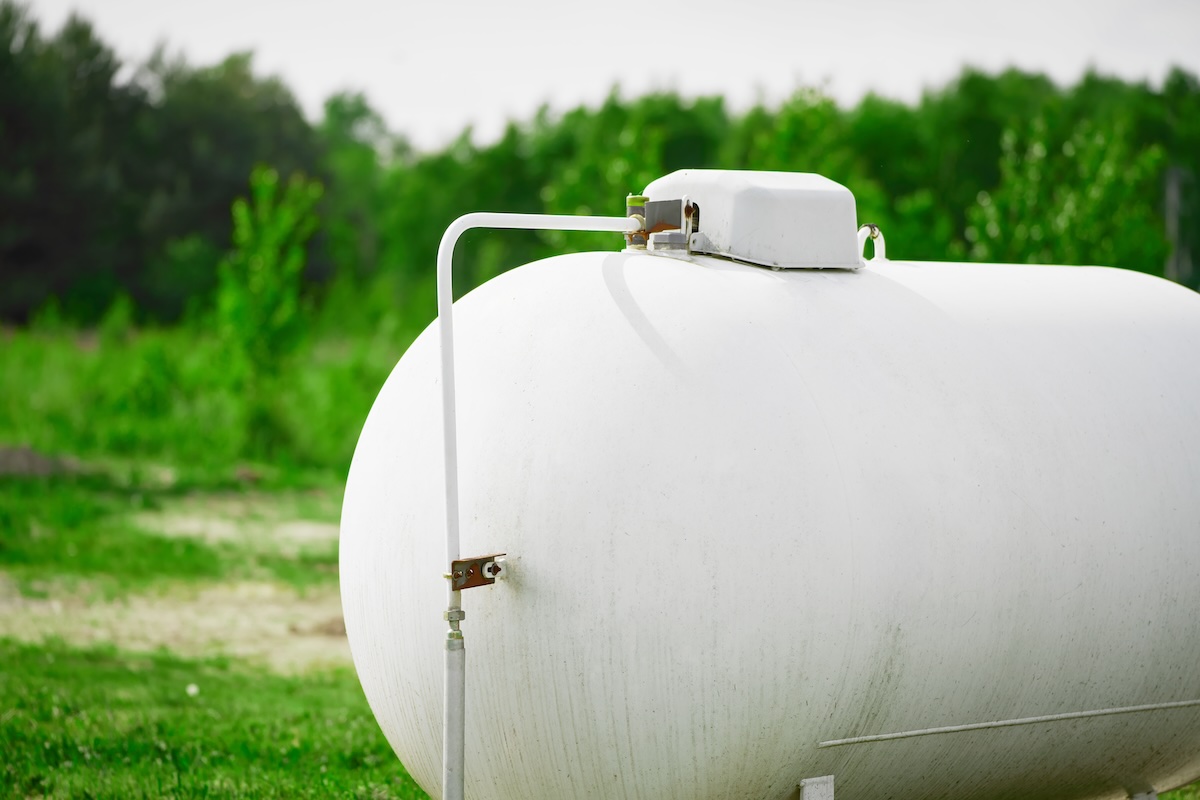
For homeowners in parts of Greater Houston or Harris County without access to utility gas—or those who just want more control—propane is an alternative. These systems run off an on-site tank, either buried in the yard or sitting beside the home.
Propane’s strength is fuel stability and independence. It stores well for long periods, doesn’t degrade like gasoline, and doesn’t rely on the utility grid staying online. With a large enough tank, your generator can keep your home powered for several days or even weeks.
Just remember: once that tank runs dry, the generator shuts off. So, tank sizing and refill logistics need to be part of the plan—especially during widespread outages, when propane deliveries may be backed up.
Note that those little store-bought/refilled propane tanks—e.g. the 20-lb grill cylinders—just aren’t built for what a whole-home generator needs. A standby unit pulls a steady, fairly high volume of fuel for hours or days at a time. Small cylinders can’t vaporize propane fast enough to keep up, especially in cooler weather, so pressure drops and the generator will stumble or shut down even if there’s fuel left in the tank.
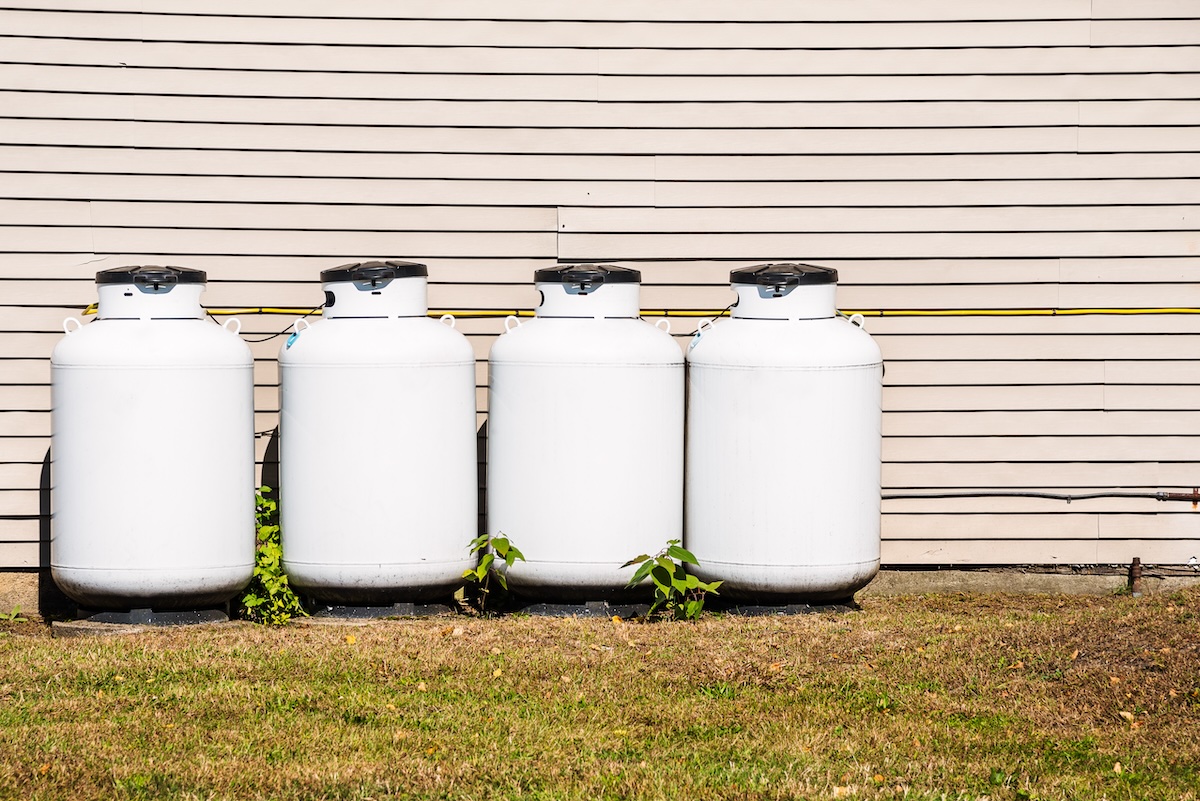
Permanently installed standby generators are designed to be hard-piped to a fixed fuel source with proper regulators and clearances. Hooking one up to disposable or grill-style tanks isn’t how they’re listed or approved to be used, so installers and inspectors won’t sign off on it. Where those small tanks do make sense is with portable generators designed specifically for them—tailgating units, RV generators, or dual-fuel portables that sip propane at a much lower rate. That’s a completely different category of equipment. For a whole-home generator, propane means a real stationary tank, not the swap-out kind from the hardware store.
Gasoline (Short-Term, Hands-On Backup)

When folks in Texas say the phrase “gas-powered generator,” they’re often talking about the portable kind—the ones you pull out of the garage, fill up manually, and plug into appliances or a transfer switch.
Gasoline units are great in a pinch. They’re usually cheaper and easy to find at big-box stores. But they’re not built for long hauls. Gasoline doesn’t store well over time, and you’ll need to refuel by hand, sometimes in the middle of a storm.
Plus, they only run as long as their small onboard tank allows—maybe 8 to 12 hours—before needing a cooldown and a refill. These are best for short outages or emergency use, not full-home, automatic backup.
Gasoline generators rely on small onboard tanks because gasoline is volatile, degrades over time, and isn’t safe or practical to store in large quantities at a residence. That immediately caps runtime. Even the best portable units are measured in hours, not days, and they assume periodic shutdowns for refueling and cooling. The engine, alternator, and fuel system are all built around intermittent use.
Whole home standby generators are engineered for sustained operation. Their engines are designed to run under load for long stretches. Their fuel systems assume steady pressure and continuous supply. Their cooling, exhaust, and controls are sized for endurance rather than convenience, and that’s why they pair with natural gas or large propane tanks instead of cans or cylinders.
So when someone compares a gasoline portable generator to a whole-home standby unit, it’s a little bit like comparing a spare tire to a dedicated 4WD system. In that, both can help you move again, but only one is meant to carry the full load, automatically, for as long as conditions demand.
So… What Does “Gas” Really Mean in Home Generator Terms?
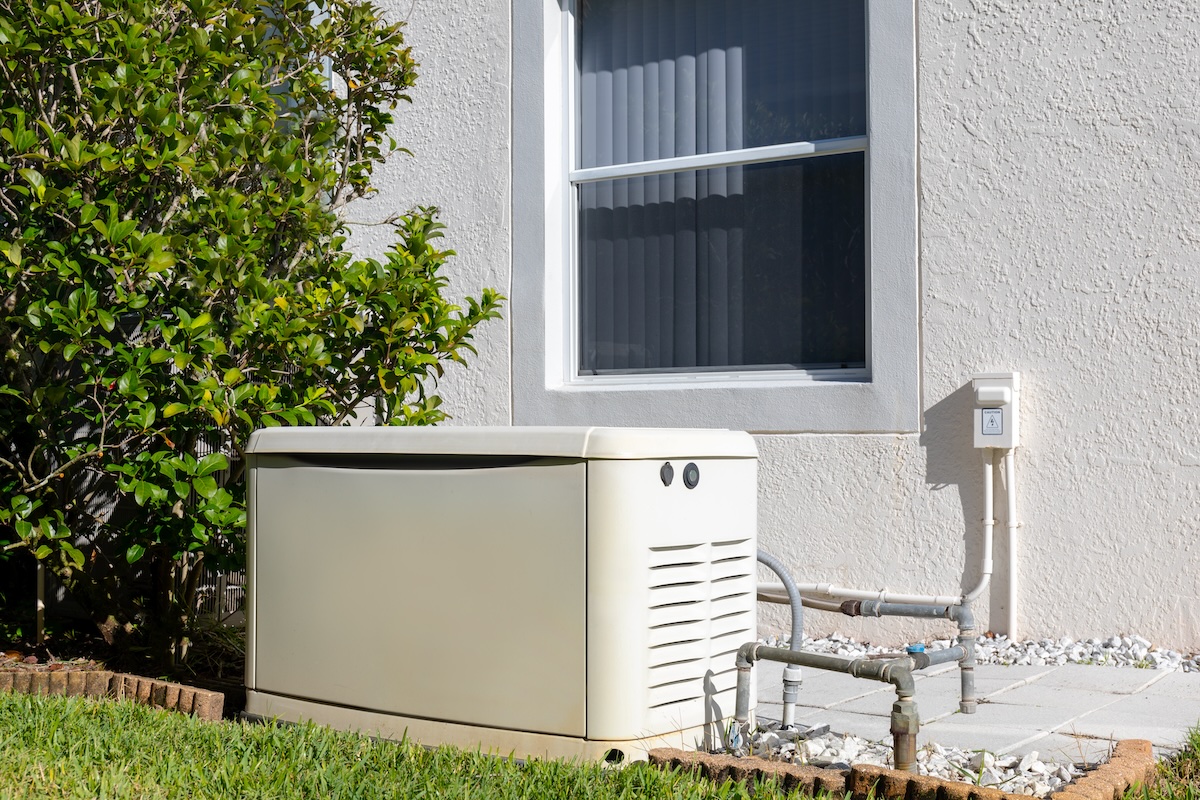
In generator talk, “gas” can be misleading. To electricians, natural gas and gasoline are completely different fuels with very different expectations:
- Natural gas means permanent, automatic standby systems—low maintenance, long runtime, runs itself.
- Gasoline usually means portable, manual, and short-term use—with a bit more hands-on effort from you.
If you’re looking at a professionally installed system wired into your panel, chances are it’s going to run on natural gas or propane—not gasoline. Most home standby generators in the Houston area run on natural gas or propane. Natural gas, in particular, offers the advantage of a constant supply—without manual refueling or storing tanks. It’s hard to overstate how valuable that can be during multi-day power disruptions, especially when fuel access becomes a challenge. Propane offers similar performance with more independence if you’re off the gas grid.
What About Battery Backup?
With all the buzz around home battery systems lately, a lot of homeowners are wondering how they stack up against standby generators. The short answer? They’re different tools for different jobs.
Battery backups can work well for short-term power interruptions—especially if you’re only trying to keep a few essentials on. They’re quiet, low-maintenance, and often marketed as a modern alternative. But for most Houston-area homes dealing with severe weather, long outages, or high energy demands, batteries have limitations that are easy to overlook:
- Battery systems are typically designed to power just a few circuits, not your whole home. (e.g. lights, Wi-Fi, fridge—maybe a small A/C unit for a short time, in extreme cases/if conditions are right)
- Run time is limited. Once the battery’s drained, that’s it—unless you have solar panels and the weather cooperates.
- Upfront costs can be significantly higher than a full standby generator system, especially if solar is part of the plan.
On the other hand, a properly-sized and professionally-installed standby generator can power your whole home—including central A/C, appliances, medical equipment, and more—for as long as needed. And with natural gas or propane, there’s no worrying about sun exposure or battery capacity. It just works when you need it.
Battery backups may suit lighter needs or homes with solar already in place—but if your priority is keeping your family comfortable and your home fully operational during multi-day outages, a generator is still the most dependable, cost-effective option.
That brings us back to fuel—because once you decide a generator’s the right solution, what it runs on becomes the next big question. And here’s where the word “gas” starts getting thrown around in ways that can be confusing. Homeowners often hear “gas generator” and picture a red portable unit from the hardware store—but in the world of whole-home backup, gas usually means something very different… and a lot more capable.
Takeaways
The kind of fuel your generator uses impacts:
- How long it can run
- Whether it works automatically or manually
- How often it needs refueling or service
- How much peace of mind you’ll have during long outages
To break it down:
- Natural gas = convenience and low-maintenance operation.
- Propane = energy independence and longer-term storage.
- Gasoline = flexibility and affordability, but more work.
Once you understand the tradeoffs, it’s easier to choose the right system for your home—and your lifestyle—here in Houston. Whether you’re thinking about a fully-automatic whole home standby generator installation or just a safety net in the garage you can drag out every now and then, your fuel choice is going to drive how that system performs when the lights go out.